Global bicarbonate export and CO₂ sequestration potential
Spatial assessment of river-to-ocean bicarbonate flux and toolbox development for scenario analysis
CarbonRun develops river alkalinity enhancement: restoring acidified freshwater systems while converting atmospheric and soil CO₂ into dissolved bicarbonate that rivers carry to the ocean, where it is stored on geologic timescales. Based in Nova Scotia, the company combines field measurement, community partnership, and rigorous carbon accounting to quantify removal potential and deploy interventions at meaningful scale.
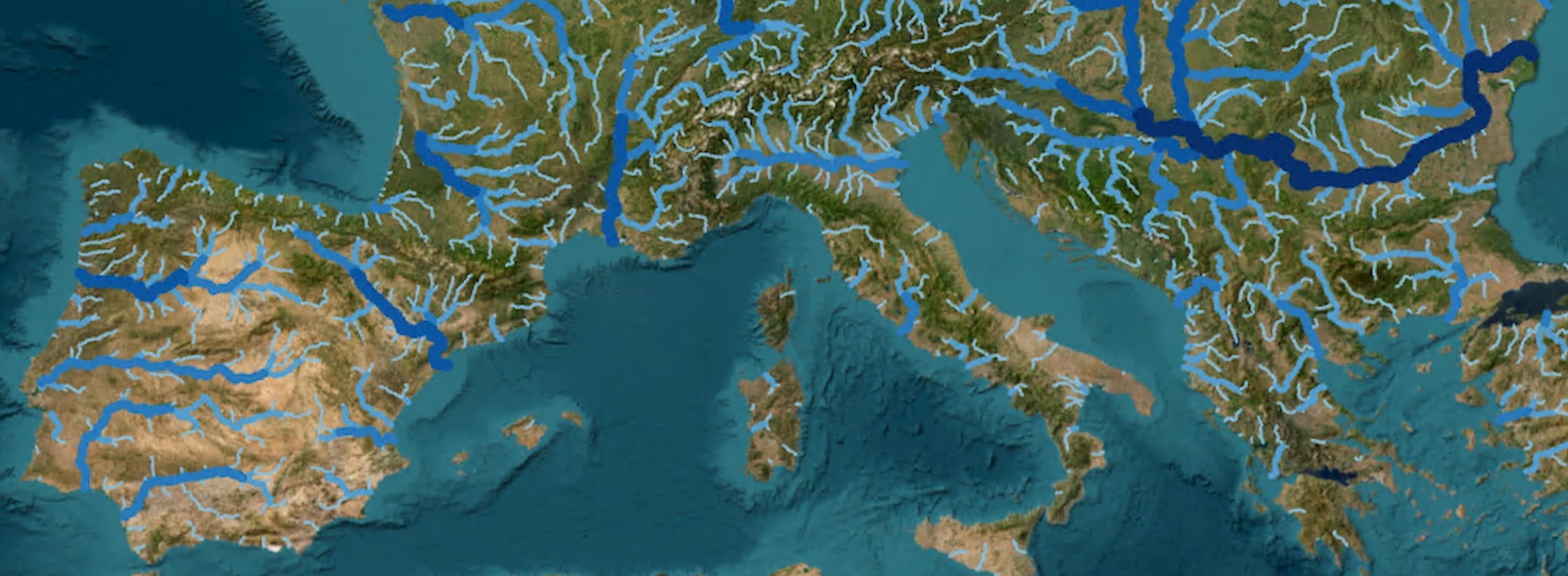
We partnered with CarbonRun to build a spatially explicit assessment of how much bicarbonate reaches the ocean at river mouths under current conditions and under plausible alkalinity-enhancement scenarios. The analysis used published global bicarbonate distributions, and integrated it with runoff and river-discharge data to estimate mass flux at basin outlets. Results were structured to support estimation of CO₂ sequestration potential globally, for Canada, and by major ocean regions.
As part of the project, we delivered a Python geospatial toolbox so users can define and run scenario analyses against a shared baseline in a reproducible way within familiar GIS environments. The toolbox accepts standard input layers (bicarbonate, runoff, basins, ocean-outlet masks) and configurable parameters (e.g. concentration targets and enhancement rules), enabling rapid what-if testing while aggregating outputs to countries, marine ecoregions, and basins for reporting and carbon accounting.
This engagement gave CarbonRun a scientifically grounded, spatially resolved view of where river-to-ocean bicarbonate flux is largest today and where enhancement could materially change delivery to the ocean.

More of our work

Let’s talk about your next project
Company